Laying interlocking pavers according to UAE standards involves a systematic approach to ensure durability, aesthetics, and compliance with local guidelines. Here's a step-by-step guide:
(Note: For the installation of grass paver blocks or cobblestones, please contact our specialist teams to ensure the best results.)
Site Preparation :
Remove all unsuitable, unstable, or loose subgrade material to ensure a solid foundation.
Excavation: Dig out the soil to a depth of 200–300 mm, depending on pedestrian or vehicular traffic.
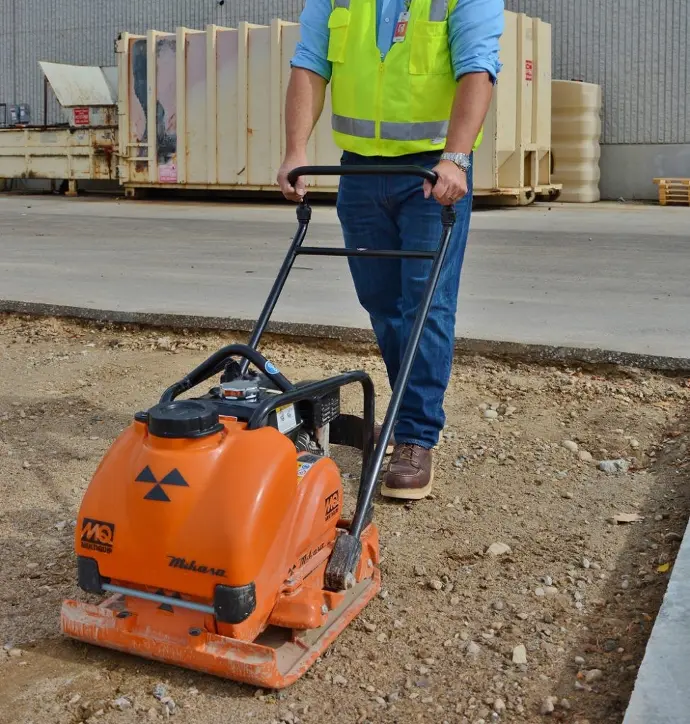
Compaction: Use a vibratory plate compactor or roller to compact the soil. The subgrade must be firm, stable, and free from voids.
Laying of Sub-base:
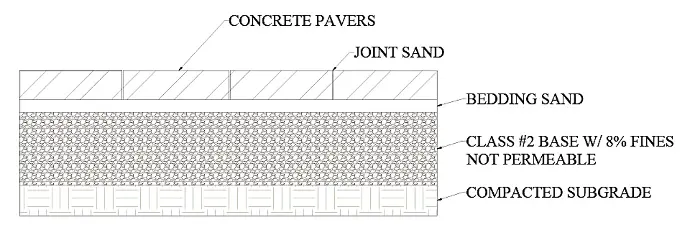
Sub-base Layer: Lay a 100–150 mm layer of crushed aggregate (typically 20 mm down) for light loads, or up to 200 mm for heavy vehicular areas.
Compact the Base: Use a plate compactor to ensure a stable foundation.
Levelling: Ensure the sub-base is even, with the required slope for drainage.
Laying of Bedding (Fine Aggregate)
Spread Fine Aggregate: Use clean, fine aggregate (0-6mm) to create a 30-50 mm bedding layer.
Level the Sand: Ensure a uniform layer by screeding it flat.
Avoid compacting the sand before laying the pavers.
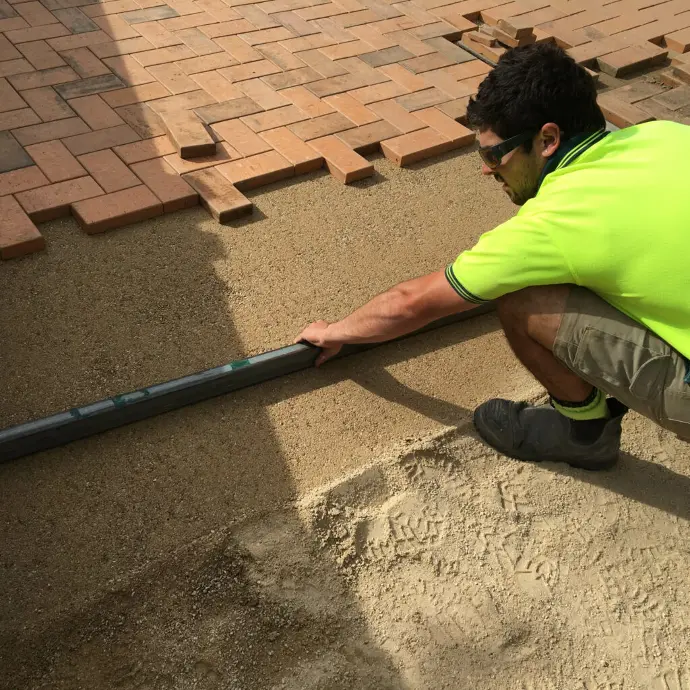
Lay the Pavers
- Begin laying pavers from a straight edge or corner, following the desired pattern.
- Cut Pavers: Use a masonry saw or block splitter for edges and corners.
- Maintain a consistent gap (1–2 mm) between pavers for sand-filled joints.
- Use a rubber mallet to adjust the pavers' position as needed.
Lay the Pavers
Begin laying pavers from a straight edge or corner, following the desired pattern.
Cut Pavers: Use a masonry saw or block splitter for edges and corners.
Maintain a consistent gap (1–2 mm) between pavers for sand-filled joints.
Use a rubber mallet to adjust the pavers' position as needed.
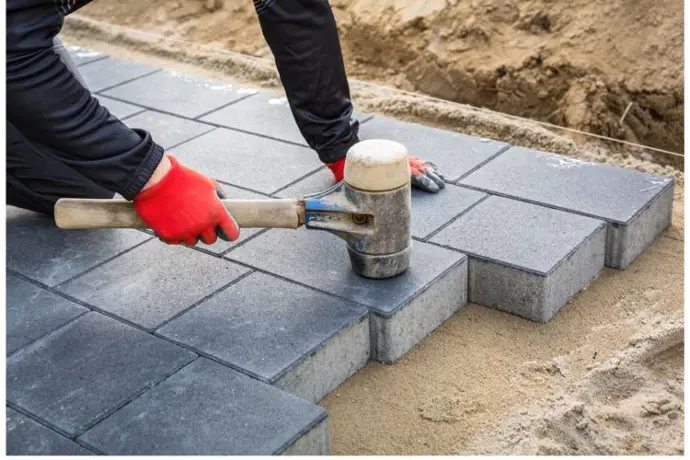
Vibrate the Pavers
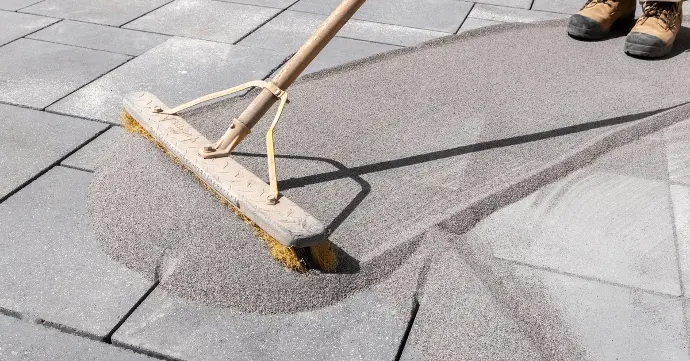
Spread fine, dry sand over the laid pavers and sweep it into the joints.
Compact the pavers using a vibratory plate compactor with a rubber mat or jute bags to protect the surface.
Repeat sanding and compaction until joints are fully filled.
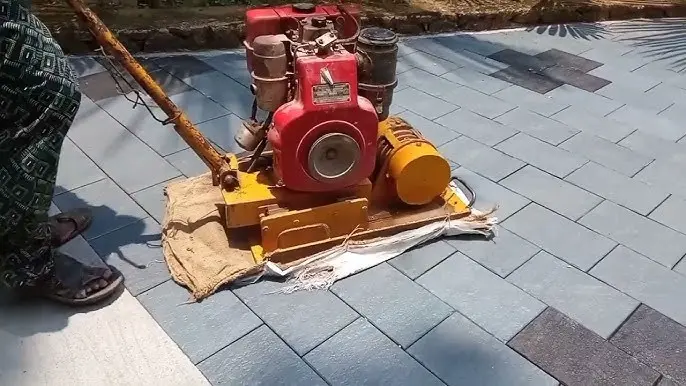
Final Compaction and Cleaning
Using the vibrating plate compactor, pass over the sanded pavers two or three times to allow sand to fill the voids between the pavers.
Sweep remaining sand into voids until they are completely filled.
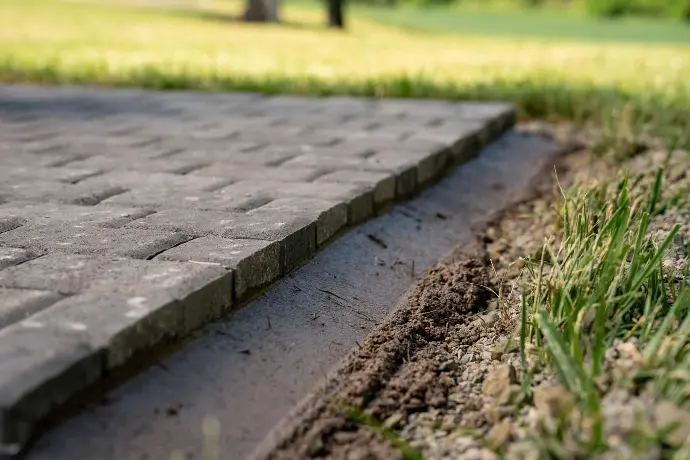
Edge the Restraints
Use a small amount of mortar mix or kerbstones to restraint the edges from pushing outward in the future.This is not a compulsory step as in most cases there would be natural restraints to restrict the outward movement.